
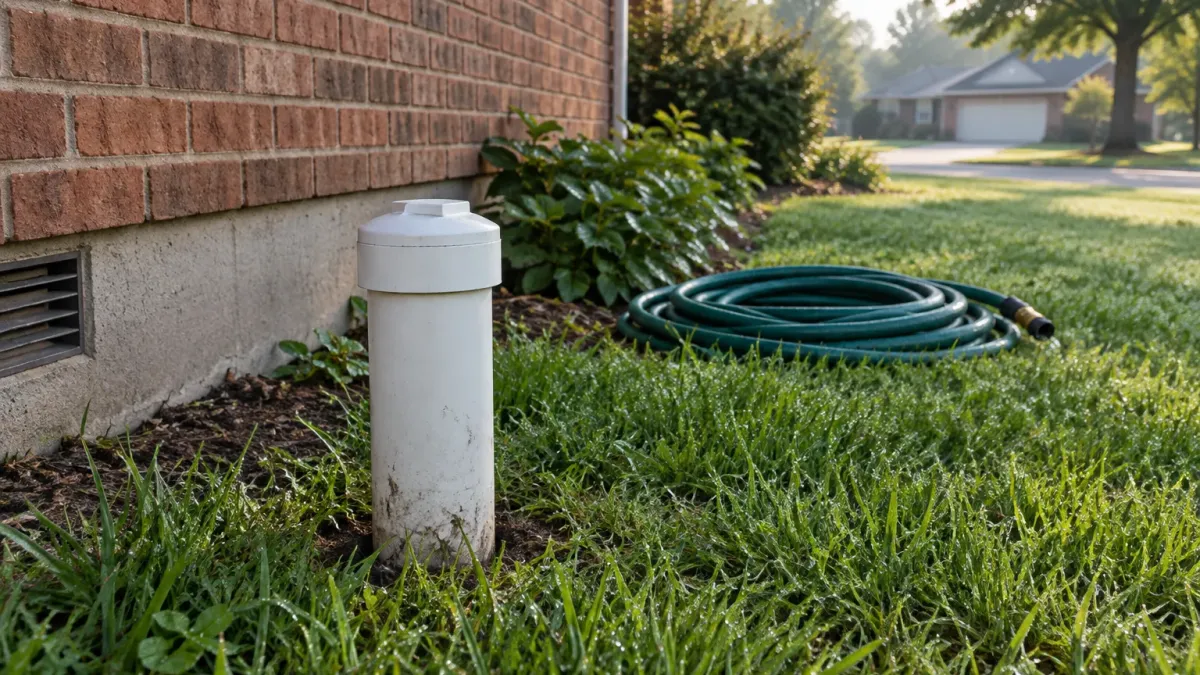
A sewer cleanout is a capped pipe that connects straight to your home's main sewer line. It gives a plumber a way in to clear a clog or inspect the line without pulling up a toilet or digging up your yard. Most are 3 or 4 inches wide, and most sit outside near the house, in a basement or crawl space, or somewhere along the line between your home and the street.
If you have never noticed yours, you are not alone. Cleanouts get mowed around, mulched over, and painted into a corner of the basement. Knowing where yours is before something backs up saves a lot of stress later.
Where to look for your cleanout
Start outside, along the side of the house where the main plumbing leaves the building. Look for a round cap, usually white, black, or gray plastic on newer homes, sitting at or just above ground level. Some are set inside a small box or lid in the lawn.
If you find nothing outside, check the basement or crawl space. The main line often exits through the foundation wall, and the cleanout is a capped fitting on the pipe near that spot. Homes on slabs sometimes have one in a garage, a utility closet, or along an exterior wall.
Some homes have a second cleanout near the property line or street, which marks where your pipe meets the public main. The homeowner generally owns the line from the house to that connection, though the exact point depends on the city, so ask before assuming.
Old cleanouts can look different from modern ones. Expect a cast iron or clay pipe stub with a square nut on top, a round metal plug, or a rusted flat cap with a threaded center. They are often buried under a few inches of soil and grass. A metal detector, or a careful probe with a screwdriver where the main line should run, can help you find one.
If you still cannot find it, a plumber can trace the line. Sunflower Plumbing & Excavation handles sewer line repair and replacement across Butler County and the Wichita area, and a missing cleanout is a common thing to raise on a call.
How to tell if the line is clogged
The cleanout itself rarely clogs. It is an access point, so what you are really asking is whether the main line behind it is blocked. The signs are usually spread across the whole house instead of one drain.
- Several fixtures slow down or back up at once, such as a tub and a toilet together
- Gurgling from a drain after a toilet flushes or the washer drains
- Water or sewage coming up through a basement or lowest-level floor drain
- A toilet that bubbles or rises when you run the shower
- A sewage smell near the foundation or around the cleanout cap
One slow sink is normally a local clog in that fixture's trap or branch line. When the symptoms show up in more than one place, especially at the lowest drain in the house, the problem is likely in the main line.
What to do, and what to skip, at the cleanout
You can look inside the cleanout, but go slowly. If the main line is backed up, the pipe can be full of water and sewage, and that water will rush out when you loosen the cap.
- Stop running water in the house first, including washers and dishwashers.
- Wear rubber gloves and boots, and stand to the side of the cap.
- Loosen the cap slowly with a wrench, ready to tighten it again if water pushes up.
- If you see standing water in the opening, put the cap back and call a plumber.
Skip chemical drain openers. They rarely cut through a main line clog, they sit in the pipe, and they are unpleasant for whoever has to open the line afterward. Roots, a collapsed section, or a belly in the pipe will not dissolve either.
Clearing a main line usually calls for a cable machine or hydro jetting and is best left to a plumber. If the clog keeps coming back, that points to a damaged or root-invaded pipe, and the lasting fix is repair or replacement. For more on that path, see this breakdown of sewer line repair in El Dorado.
What drives the cost of sewer cleanout work
Prices vary because the job varies. Cleaning a line through an existing, accessible cleanout is a different job from adding one where none exists. Ask any contractor what is included before work begins, and compare like for like.
Here is what moves the price:
- Whether a cleanout already exists. Adding one means cutting into the pipe and often digging.
- Depth of the line. A shallow line near the surface is simpler than one buried several feet down.
- Surface to cut through. Soil and lawn are easier than a driveway, sidewalk, or concrete slab.
- How bad the clog or damage is. A soft blockage clears quickly. Tree roots or a broken pipe may mean repair.
- Distance and access. A long run to the street, a tight crawl space, or a cleanout buried under landscaping all add time.
- Timing. Backups at night or on a weekend are emergency calls.
Sunflower Plumbing & Excavation offers transparent pricing, so you can ask what a job involves and how it is priced before it begins. If a repair means digging, the company also does excavation, trenching, and backfill and grading, so the same crew can restore the area after the work.
If the line is old or damaged, adding a new cleanout during that work is a smart time to do it. Pipe is already exposed, and you end up with easy access for the future.
Why cleanouts matter in older El Dorado neighborhoods
Census figures put the median year El Dorado homes were built at 1959. That means about half the homes in town predate that year, and many have sewer lines laid decades ago. Older lines were often clay tile or cast iron, and joints in those materials let tree roots in over time. Cast iron also corrodes from the inside.
Older homes are also the ones most likely to have a buried, rusted, or missing cleanout. Past owners may have paved over it, built a deck, or never had one installed. When a backup happens, a plumber who cannot reach the line from the outside has to pull a toilet, which is slower and messier.
El Dorado sits along the Walnut River in Butler County, and large mature trees are common in older neighborhoods. Roots seek out moisture, and a sewer joint is a reliable source. If your home is from the 1950s or earlier, it is worth locating your cleanout and mentioning your pipe material the next time a plumber is out.
You can see how the company handles sewer line repair in El Dorado on its city page.
Frequently Asked Questions
What is a sewer cleanout?
A sewer cleanout is a capped access pipe on your home's main sewer line. A plumber removes the cap to feed in a cable or jetting hose, clear a clog, or look inside the line. It saves digging up the yard or pulling a toilet, and most homes have at least one outside or in the basement.
How much does it cost to have a sewer clean out?
The price depends on the job, so a single number would mislead you. Cleaning through an existing cleanout costs less than adding a new one, which can require digging. Depth, concrete, roots, damage, and access all matter. Ask the plumber what is included before work starts. Sunflower Plumbing & Excavation offers transparent pricing and can walk you through it.
How do you know if your sewer cleanout is clogged?
Look for symptoms across the house rather than one drain. Backups in a floor drain, gurgling toilets, or several fixtures draining slowly at once point to the main line. If you open the cap and see standing water, the line is blocked past that point. Close it back up and call a plumber.
What do old sewer cleanouts look like?
Old cleanouts are usually cast iron, clay, or galvanized metal. Expect a rusted round plug or cap, sometimes with a square nut on top, set flush with the ground and often covered by soil or grass. Some sit inside a small concrete or metal box. Newer ones are typically white or black plastic with a threaded cap.
Can I open my sewer cleanout myself?
You can, but be careful. If the line is backed up, sewage can rush out when the cap loosens. Stop using water, wear gloves and boots, stand to the side, and loosen slowly. If you see water in the pipe, tighten the cap and call a plumber instead of trying to clear it yourself.
Does every house have a sewer cleanout?
No. Many older homes have none, or have one buried or painted over. Newer construction normally includes at least one, and plumbing codes in many places require it. A plumber can locate your line or add a cleanout during repair work, which gives future clogs a simple way in.
Need help locating or clearing your sewer line?
Whether your cleanout is buried, clogged, or missing, a plumber can sort it out. Sunflower Plumbing & Excavation is a licensed and insured, locally owned business in Butler County. The team is available Monday through Friday, 8am to 5pm, with 24/7 emergency service for backups that cannot wait. Satisfaction is guaranteed on the work.
Read about sewer line replacement and repair or call (316) 333-6326.