
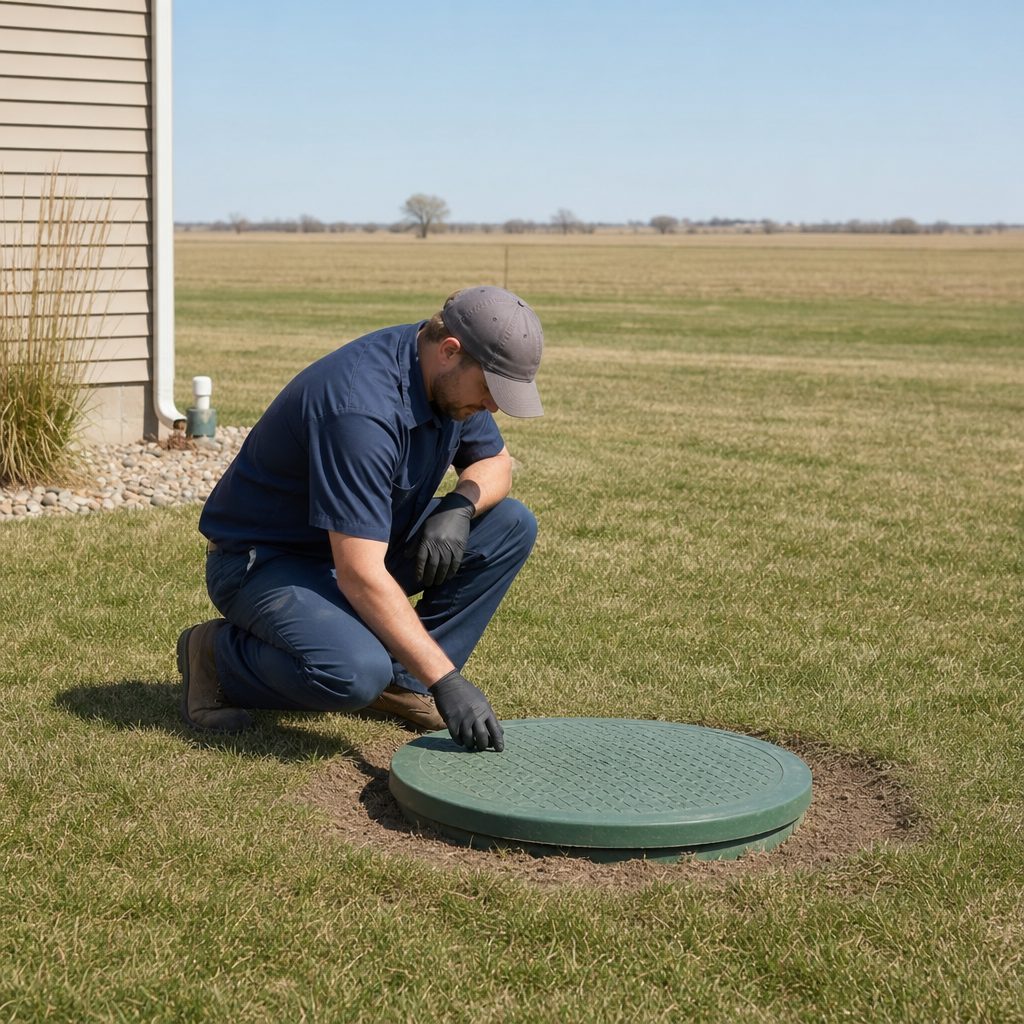
If you've walked through the plumbing aisle lately, you've probably seen them — bottles and packets promising to supercharge your septic system, break down waste faster, and save you from costly repairs. Septic tank additives are marketed aggressively, and the claims sound convincing. But if you're a homeowner in El Dorado or anywhere in Butler County relying on a septic system, you deserve a straight answer: do these products actually work?
The short version? It's complicated — and for most homeowners, the answer is closer to "no" than the packaging would have you believe.
What Are Septic Tank Additives?
Septic tank additives fall into two broad categories:
- Biological additives — bacteria, enzymes, or yeast cultures meant to supplement the natural microbial activity already happening inside your tank
- Chemical additives — acids, solvents, or other compounds designed to break down solids or unclog a sluggish system
Biological products are the more common variety you'll find at hardware stores. Chemical additives are less common today and, in many cases, actively harmful.
The Science Behind Your Septic System
Here's the thing most additive manufacturers don't want you to think about: your septic tank already contains billions of bacteria. Every time waste enters the tank, it brings naturally occurring microbes that break down solids, separate liquids, and keep the system in balance.
A healthy septic system doesn't need a bacterial boost — it generates its own. The bacteria that come in with normal household waste are well-adapted to that environment. Pouring in a packet of store-bought microbes doesn't meaningfully increase the population or efficiency.
What the Research Actually Shows
The EPA has studied septic additives and their conclusion is measured but clear: there is no credible scientific evidence that biological additives improve septic system performance or reduce the need for pumping. Some state environmental agencies have gone further, warning that certain chemical additives can:
- Kill the beneficial bacteria your tank depends on
- Damage your drain field by flushing partially dissolved solids into the soil
- Introduce harmful compounds into groundwater — a serious concern for rural Butler County properties on well water
When Additives Might Not Hurt (But Still Won't Help Much)
To be fair, most biological additives are relatively harmless. If you've recently used heavy antibiotics, bleach-based cleaners in large amounts, or other products that could disrupt your tank's bacterial balance, a one-time biological additive isn't going to cause damage. But it's also not going to fix a struggling system — that requires a professional diagnosis.
If your system is backing up, draining slowly, or producing odors, no additive will resolve the underlying problem. Those are signs of a system that needs inspection, pumping, or repair.
What Actually Keeps a Septic System Healthy in El Dorado
Butler County's soil conditions, lot sizes, and rural water table make septic maintenance more than just a convenience — it's a responsibility. Here's what genuinely works:
1. Regular pumping. Most systems need to be pumped every 3–5 years depending on household size. This is non-negotiable and no additive replaces it.
2. Watch what goes down the drain. Grease, "flushable" wipes, medications, and harsh chemical cleaners are far more damaging to your system than anything an additive can fix.
3. Protect your drain field. Don't park vehicles on it, plant trees nearby, or route roof drainage across it.
4. Schedule inspections. Catching a problem early — a cracked baffle, a clogged inlet, a failing drain field — saves thousands compared to emergency repairs.
If you're unsure about the state of your system, our septic services team can inspect and pump your tank, giving you a clear picture of what's actually going on rather than a bottle of false reassurance.
The Bottom Line for Butler County Homeowners
Septic tank additives are, at best, unnecessary and, at worst, actively harmful to your system and your groundwater. The bacteria your tank needs are already there. What it actually needs is consistent maintenance, smart usage habits, and a professional eye every few years.
If you're in El Dorado, Derby, Augusta, or anywhere across our service area, skip the additive aisle and put that money toward a proper inspection or pumping schedule instead. Your system — and your wallet — will thank you.
Ready to get your septic system on the right track? Contact Sunflower Plumbing to schedule a septic inspection or pump-out in Butler County and the greater Wichita area.